


Animals and Plants
Each of the Dakota Prairie Grasslands offers distinct landscapes and diverse wildlife, from Sheyenne’s tallgrass prairie to the badlands of Little Missouri and the rolling hills of Grand River and Cedar River.
Before you visit, download the Plant and Wildlife Checklist to keep track of the flora and fauna you may spot.
Animals
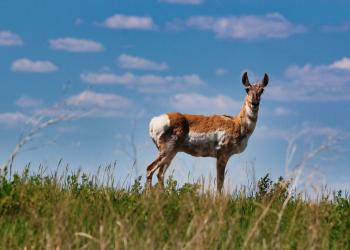
The fauna of the Dakota Prairie Grasslands features a diverse ecosystem that supports a wide variety of mammals, birds, reptiles, insects, and much more.
Plants

The flora of the Dakota Prairie Grasslands features a diverse ecosystem, which is dominated by native grasses and forbs. Certain areas have woody plants, including trees and shrubs.
Birding in the Grasslands
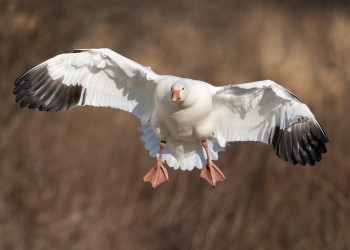
The Dakota Prairie Grasslands is home to a diverse and fascinating array of birdlife. Some species are perpetual residents, while others are migratory, making the region a crucial breeding and stopover area. Explore the birding opportunities across the four Ranger Districts on the Birding in the Grasslands page.
Grouse Gatherings in the Grasslands

The Dakota Prairie Grasslands wildlife biologists monitor three species of prairie grouse, including sharp-tailed grouse, greater sage-grouse, and greater prairie chickens at dancing grounds across the grasslands each spring.
The Grouse in the Grasslands page that offers a photo gallery, plus an article highlighting the sharp-tailed grouse.
Exotic and Invasive Species

Exotic species, also called non-native or non-indigenous species, are organisms introduced into areas outside their natural range that negatively impact the economy, environment, or human health and can disrupt local grassland ecosystems.
Animal Studies and Surveys in the Grasslands

The Forest Service conducts various animal studies and surveys in the Dakota Prairie Grasslands to understand population dynamics, habitat requirements, and the impact of management practices on wildlife. Learn more about the fascinating work they do and some of the interesting characters they see.
Birds on the Sheyenne National Grassland
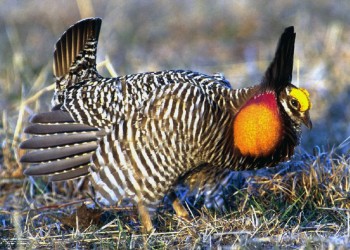
BIRD STATUS AND DISTRIBUTION ON THE SHEYENNE NATIONAL GRASSLAND: 2010
By Dan Svingen and Ron Martin
Birds on the Cedar River & Grand River National Grasslands
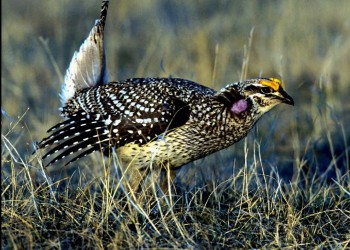
BIRD STATUS AND DISTRIBUTION ON THE CEDAR RIVER & GRAND RIVER NATIONAL GRASSLANDS: 2011
By Dan Svingen, David Griffiths, and Carolyn Griffiths
PLANTS OF THE GRAND RIVER & CEDAR RIVER NATIONAL GRASSLANDS
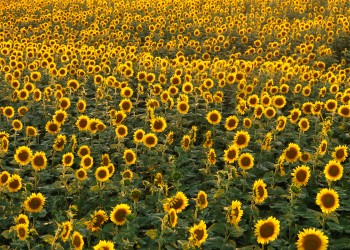
Kurt Hanson summarizes a list of known plant species found in the Grand River and Cedar River National Grasslands - diverse landscapes including mixed-grass prairie, cottonwood riparian areas, woody draws, sandstone ridges, sand dunes, and badlands.
Plants of the Sheyenne National Grassland
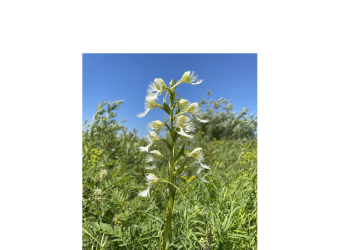
The Sheyenne National Grassland in southeastern North Dakota spans 70,200 acres and is home to nearly 800 plant species, 88 of which are highlighted in this booklet. The grassland supports one of the largest populations of the threatened western prairie fringed orchid, along with other unique plants such as lady tresses, ferns, western wahoo, tall blazing stars, and much more.